Expert lead flashing and valleys that keep water out at the roof's weak points — around chimneys, dormers, abutments and valleys. Code 4 & 5 lead, properly dressed. Free quotes across Tayside.
Most roof leaks don't start in the middle of a tile or slate field — they start where the roof meets something else. A chimney stack, a parapet wall, a valley between two roof slopes, a dormer cheek. Those junctions are where water finds its way in, and lead is the material that seals them properly when it's done right.
Storm Guard Roofing & Building carries out leadwork across Dundee, Perth and Angus — from straightforward flashing replacements to full valley relining and dormer cheek work. We use correct-code lead and dress it properly, rather than relying on mastic and hoping for the best.
The difference between leadwork that lasts 40 years and leadwork that fails in five comes down to materials and method. We use Code 4 lead for flashings and soakers and Code 5 for valleys and box gutters — the correct weight for each application. The lead is dressed properly and welted at the edges so it can expand and contract with the temperature without cracking. We don't rely on mastic to cover up poor workmanship, because mastic dries out, cracks and needs redoing every few years.
Failed leadwork doesn't always announce itself with a drip through the ceiling straight away. Things to watch for include cracked or lifting flashing that has pulled away from the mortar joint, tide marks or staining on a chimney breast inside the house, and damp patches near the chimney that appear after heavy rain. If you can see daylight between the flashing and the wall from the ground, the seal is already gone.
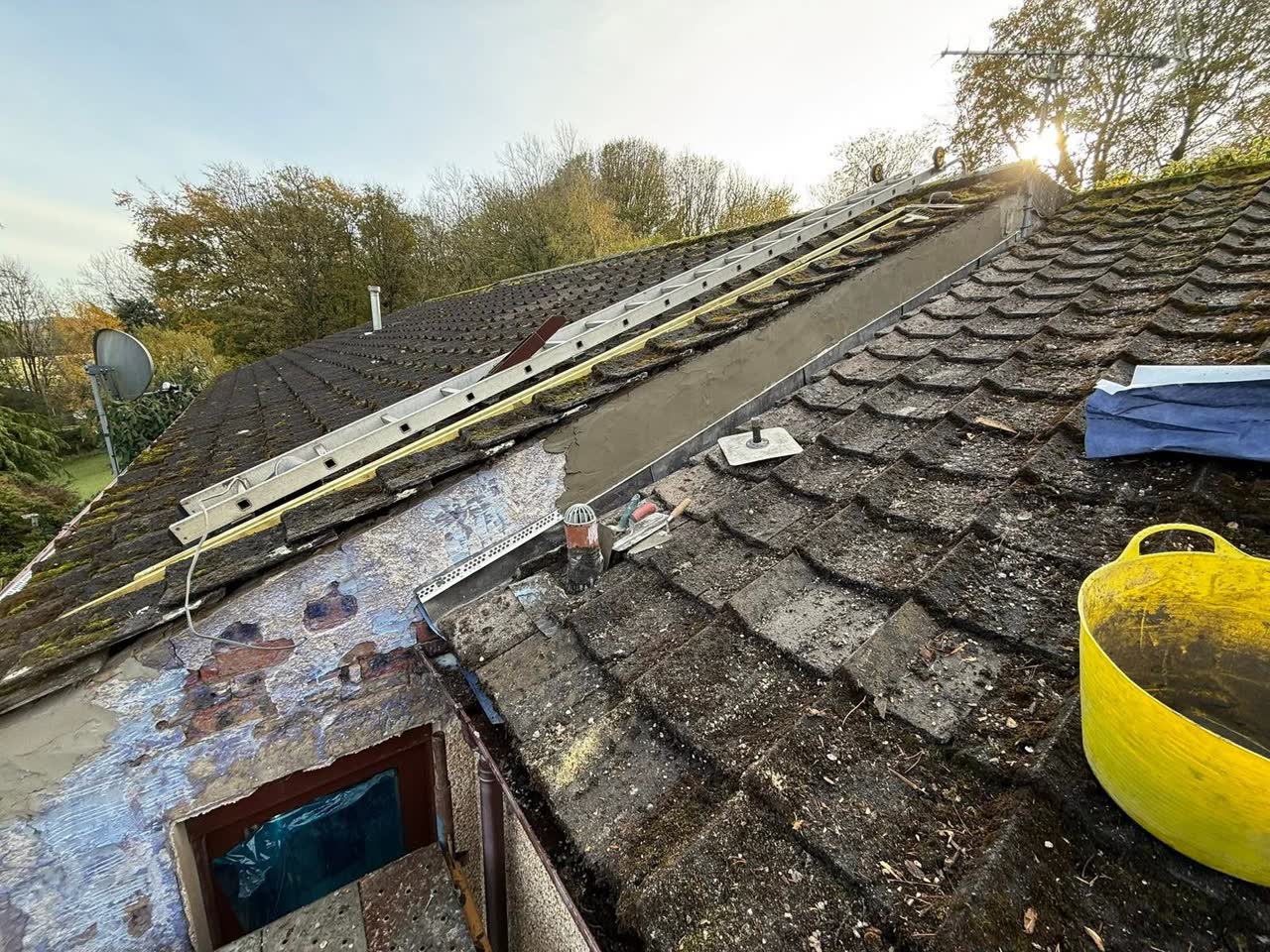
A recent Storm Guard leadwork job:
Leadwork rarely sits in isolation. If tiles or slates around a chimney are loose or broken, we deal with those as part of the same job rather than leaving the tile work for someone else. Where a failing valley has allowed water to track under the roof covering, we'll check the timbers below before we reline it. If a survey reveals the roof is past economic repair, we'll talk you through your options for a new roof. And when a lead issue is part of a wider roof repair, we handle everything together so there's one team on the job and one point of contact.
Call or WhatsApp us a photo of the problem so we can assess it quickly.
We check the roof properly and find the true cause — not just the symptom.
You get a clear, written price. No surprises, no pressure.
We carry out the repair, tidy up, and back it in writing.
Most roof leaks don't start in the middle of the roof — they start at the joints, where the roof meets a chimney, wall or valley. Properly dressed lead seals those weak points and keeps water out for decades.
Good leadwork, correctly installed, can last 40 years or more. The problems usually come from poor installation or from cheap mastic used instead of lead.
Yes. If the rest of the roof is sound, we can replace failed flashing or a worn valley on its own and make the junction watertight again.
Yes — chimney flashing is one of the most common causes of leaks, and we re-lead stacks as part of our chimney work too.
Properly dressed leadwork outlives a mastic patch many times over. Get it done right and forget about it for decades. Talk to Storm Guard today.